
WHO GETS TO BE FEARLESS?

    2
    0

    John Stewart, fear, race, and Hal Jordan

    Episode 3, “OutKast,” is really about one question:

    What does “fearless” mean when fear is necessary for survival?

    WHO GETS TO BE
    FEARLESS?


    What Lanterns Episode 3 Reveals About Black Manhood, Courage, and Inherited Burden

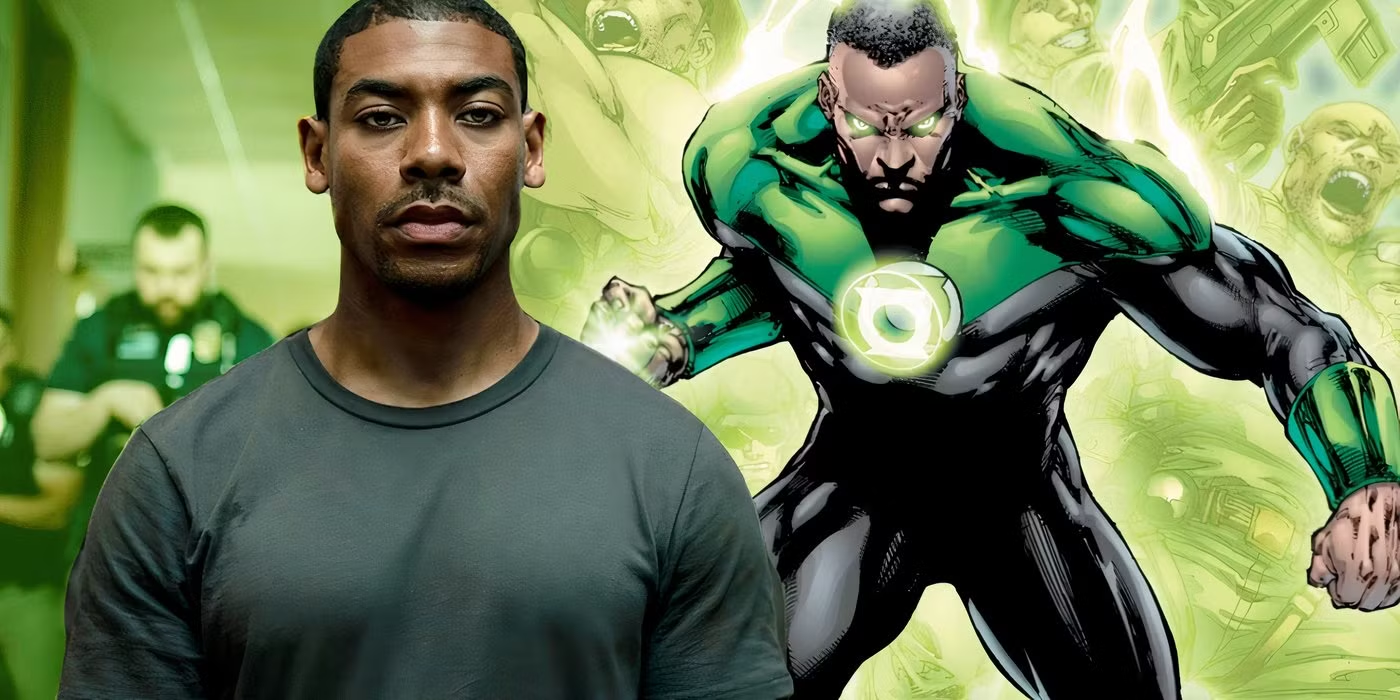
    Episode 3 of Lanterns, titled “OutKast,” rewrites John Stewart’s origin. It turns a superhero selection story into a deeply human examination of fear, Black manhood, parental pressure, and institutional blindness. It asks: Who gets to define courage when people do not experience danger in the same way?Before Hal Jordan receives Abin Sur’s ring, it considers John Stewart Sr. The ring asks whether he is afraid. John Sr. answers honestly, and the opportunity disappears. He fails because Green Lanterns are expected to overcome great fear. His answer reflects responsibility, not cowardice. He is a Black husband and father in modern America, aware that danger can threaten both him and the family depending on him.


    Bernadette Stewart recognizes the unfairness. The Guardians apply one universal standard without understanding the lives being judged by it. Their neutral test rewards people who can perform fearlessness while punishing someone whose caution was developed through experience. John Sr. is not rejected for abandoning his family. He is rejected partly because loving his family gives him something meaningful to lose.

    The Guardians attempt to compensate the Stewarts with a diamond and a future possibility: their infant son might become a Lantern if he is raised without fear. That proposal transfers the burden of correcting the Guardians’ mistake onto the family. John Jr. becomes both a beloved child and an unfinished project.

    Bernadette’s response is understandable but damaging. She prepares John through weapons training, survival tests, evaluation, and emotional pressure. Her love becomes a system of conditioning. John learns that excellence is not an achievement; it is the minimum price of admission. This is where the episode explores Black exceptionalism: the belief that a Black child must be undeniably superior simply to receive an opportunity others can obtain while imperfect.
     

    MBQ MAGAZINE | CULTURE & COMMENTARY

    John’s precision eventually becomes his greatest Lantern strength. His ability to visualize the internal structure of his father’s watch reconnects him to his comic-book identity as an architect. His imagination, not merely his military training, makes him extraordinary. The artist inside the weapon is what may separate him from Hal and Guy Gardner.Hal’s story provides the episode’s irony. John Sr. admits fear and is rejected. John Jr. suppresses fear and becomes emotionally armored. Hal presents himself as fearless, yet reacts with insecurity when he discovers the Guardians may replace him with John. All three men experience fear, but each man has learned to express it differently.

    The Guardians intensify that conflict by hiding their plans and framing succession as replacement. Instead of encouraging trust between two complementary Lanterns, they create scarcity and rivalry. Hal becomes suspicious, John becomes defensive, and Sinestro gains room to manipulate both men.

    Episode 3 ultimately argues that fearlessness and courage are not the same. Fearlessness may come from confidence, denial, recklessness, or privilege. Courage means understanding the danger and choosing principled action anyway. John Stewart’s greatest victory will not simply be receiving the ring. It will be defining courage for himself rather than living as proof that his father deserved better.

    DISCUSSION: Did John Stewart’s father fail the test—or did the test fail him?

     

    LEAVE A REPLY

    Please enter your comment!
    Please enter your name here