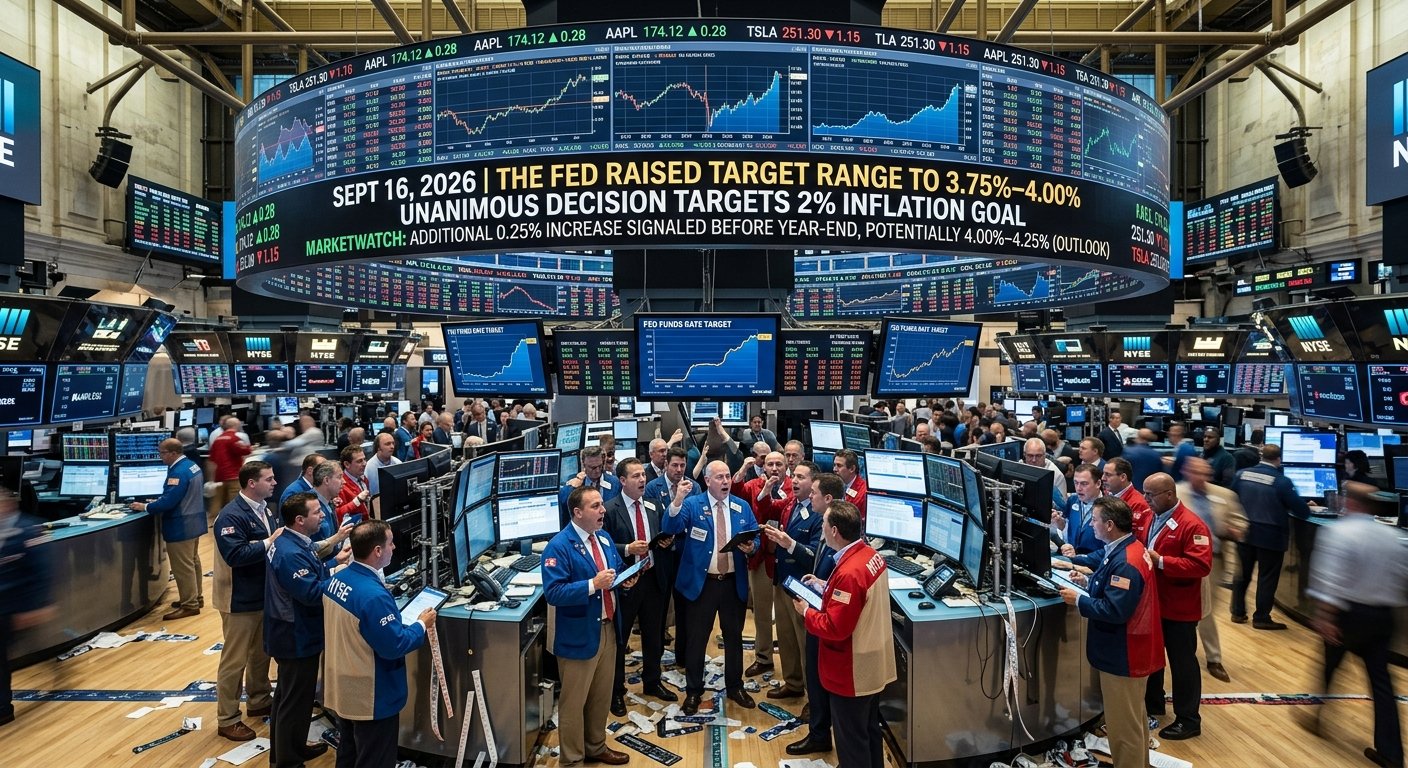
The Federal Reserve’s decision to raise its benchmark rate to 3.75%–4.00% ripples directly through consumer lending. While the central bank does not directly set consumer interest rates, commercial lenders adjust prime rates, credit card APRs, and home equity lines of credit (HELOCs) in lockstep.
Here is how the quarter-point hike impacts everyday consumer debt and mortgage products:
Credit Cards & Variable Lines of Credit Most credit cards carry variable annual percentage rates (APRs) tied directly to the Prime Rate. Lenders usually apply the 0.25% increase within one to two billing cycles.
-
$10,000 Balance: An additional $25 per year in interest charges, assuming no change in principal balance.
-
Impact: While minimal on small balances, compound interest on higher credit card debt accelerates rapidly if only minimum payments are made.
Home Equity Lines of Credit (HELOCs) Unlike fixed-rate mortgages, HELOCs feature variable interest rates that fluctuate with Fed decisions.
-
$50,000 HELOC: Adds approximately $10.42 per month ($125 annually).
-
$100,000 HELOC: Adds approximately $20.83 per month ($250 annually).
Fixed-Rate Mortgages vs. Adjustable-Rate Mortgages (ARMs)
-
Existing Fixed Mortgages: Standard 15-year and 30-year fixed-rate mortgages are unaffected. Your monthly payment and rate remain unchanged.
-
Adjustable-Rate Mortgages (ARMs): Homeowners approaching their adjustment window will see their rates reset higher, reflecting cumulative Fed actions over the past holding period.
-
New Mortgages: 30-year fixed mortgage rates track 10-year Treasury yields rather than the federal funds rate directly. While higher benchmark rates create upward pressure on mortgage yields, market expectations for future economic growth and inflation dictate long-term rates.
Key Consumer Action Steps
-
Prioritize High-Interest Debt: Pay down variable-rate credit cards or floating-rate loans before additional rate increases occur.
-
Consider a HELOC Fixed-Rate Lock: Check if your lender allows you to convert floating HELOC balances into a fixed-rate segment.
-
Shop Savings Accounts: High-yield savings accounts (HYSAs) and CDs often see yields rise following Fed hikes, offering higher returns on cash reserves.
A 0.25% (25 basis point) Fed rate hike pushes key short-term interest rates upward, but its direct impact varies significantly between borrowing for a vehicle and earning yield on cash savings.
1. Impact on Auto Loans
Most traditional auto loans are fixed-rate installment contracts, meaning existing borrowers will see zero change to their current monthly payments or APR. However, for new car buyers or variable-rate vehicle loans, borrowing costs will adjust upward:
-
Direct Cost Impact: On a 0.25% APR increase, the added cost per month is relatively modest—roughly $5 to $6 per month on a typical $40,000, 60-month new car loan.
-
Market Dynamics: Auto loan interest rates tend to track 2-year to 5-year Treasury yields and broader lender competition rather than moving 1:1 with the overnight Fed Funds Rate. Dealer promotional financing (e.g., 0% or 1.9% subvented APRs from manufacturers) may decrease in availability or carry stricter credit requirements.
Monthly Payment Impact of a +0.25% Hike on Auto Loans (60-Month Term)
2. Impact on High-Yield Savings Accounts (HYSAs)
Unlike traditional brick-and-mortar banks (which pass on very little rate growth), online banks and fintech providers compete aggressively for consumer cash deposits.
-
Pass-Through Yields: Top HYSAs typically pass through 80% to 100% of a Fed rate hike to depositors over 1–3 weeks.
-
Yield Growth: An account yielding 4.25% APY before the hike will likely adjust to roughly 4.40%–4.50% APYover the following billing cycle.
Annual Extra Return on Savings (+0.25% Pass-Through Rate Increase)
Summary Takeaway
-
For Auto Buyers: The quarter-point hike adds less than $6/month to an average vehicle loan. You can easily negate the cost of the rate hike by increasing your down payment by $300–$400 or shopping around across credit unions.
-
For Savers: High-yield accounts will pay slightly higher returns. If your primary cash is sitting in a traditional big-bank account paying 0.01%–0.05%, moving it to a high-yield online bank captures the full benefit of recent Fed rate adjustments.