
MBQ | Money, Business & Q
Culture • Relationships • Black Family • Wealth
What if the future of the Black family doesn’t look like the traditional marriage we’ve been taught to accept?
Something interesting is happening in the Black community, and whether you agree with it or not, the conversation is getting louder.
More Black men are publicly discussing relationships involving multiple women. But here’s the twist: some of the women involved aren’t hiding, fighting, or competing. They’re standing beside one another and openly acknowledging their relationships.
And social media is putting it all on display.
FROM THE PULPIT TO SOCIAL MEDIA
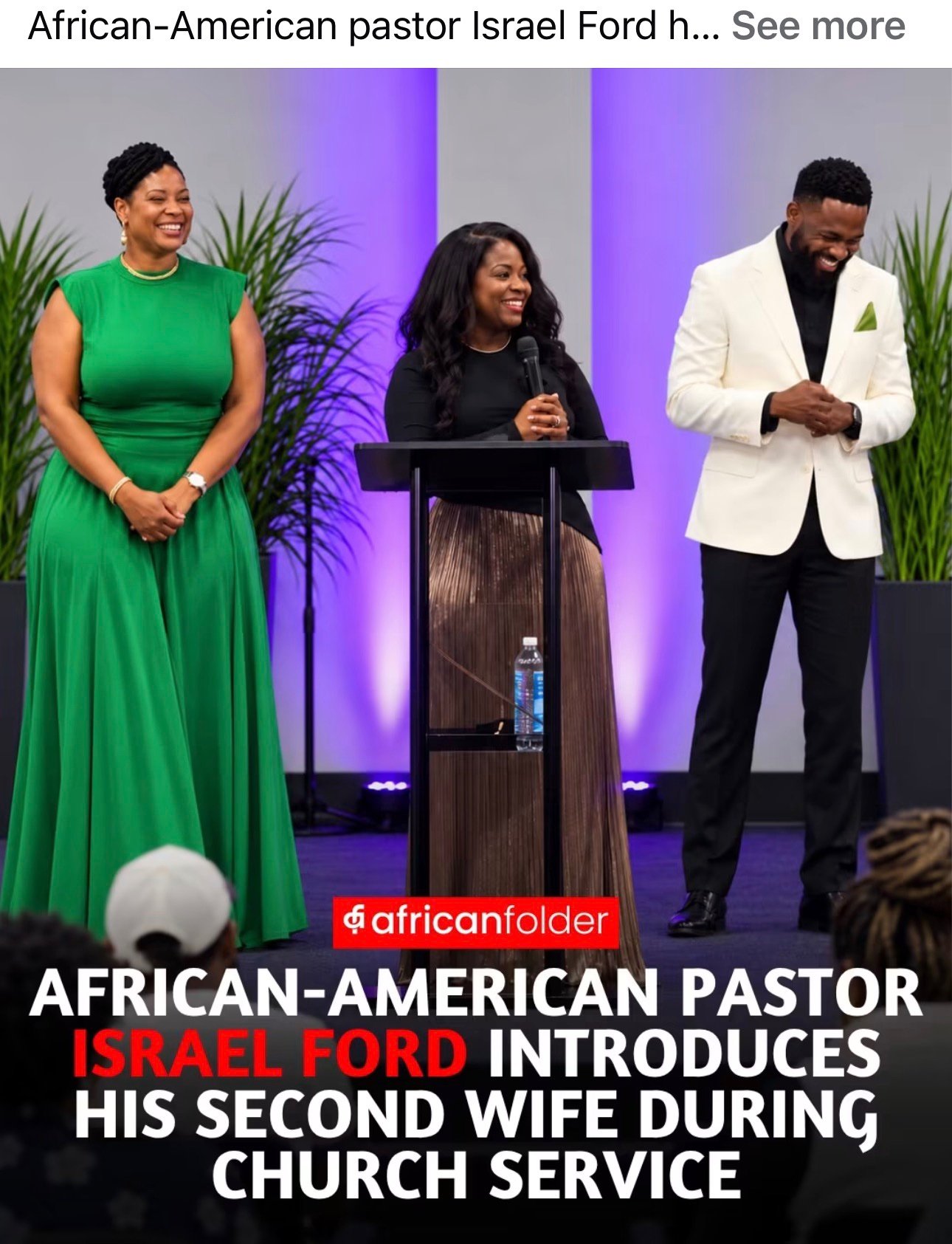
In a video circulating online, a pastor’s wife stands before a congregation and introduces another woman, Minister Shakayla, as her husband’s second wife.
Read that again.
The FIRST wife makes the announcement.
She doesn’t introduce the woman as a mistress, side chick, or homewrecker. She calls her “my sister in marriage.”
The congregation reacts with surprise, but the announcement is presented as a moment of celebration rather than scandal.
In another viral-style video, a 40-year-old Black man openly presents his wife and their girlfriend, seemingly unconcerned about society’s expectations.
Two completely different environments.
One rooted in religion and spiritual conviction.
The other representing a more modern, openly non-monogamous lifestyle.
But both raise the same question:
Are we witnessing the beginning of a cultural shift in how some Black men define relationships, marriage, and family?
IS THIS REALLY SOMETHING NEW?
Historically, polygyny — one man having multiple wives — existed in numerous African societies long before European colonial rule and Western marriage laws reshaped family structures.
It was practiced for different cultural, economic, religious, and social reasons.
Even the Bible contains accounts of men with multiple wives, including Abraham, Jacob, David, and Solomon.
Of course, biblical descriptions do not automatically mean biblical endorsement, and Christian denominations disagree sharply about how those passages should be interpreted.
But the historical reality remains: monogamy has never been the only relationship structure practiced throughout human history.
So perhaps the conversation isn’t about inventing something new.
Perhaps it’s about openly reconsidering something old.
FROM SIDE CHICKS TO SISTER WIVES?
Here’s where the conversation becomes uncomfortable.
Society has long criticized men who maintain secret relationships outside their marriages.
But what happens when the relationship isn’t secret?
What happens when everyone knows?
What happens when the women voluntarily agree to the arrangement?
What happens when the relationship involves shared responsibilities, raising children, building businesses, and creating generational wealth?
Does that change the conversation?
There is a major difference between cheating and consensual non-monogamy.
Cheating involves deception and broken agreements.
Consensual relationships require knowledge, honesty, boundaries, and agreement among everyone involved.
But consent must also be ongoing and freely given. Public approval or religious participation alone doesn’t prove that every person has equal power in the relationship.
THE ECONOMICS OF POLYGYNY
This is the part of the conversation I believe deserves more attention.
We talk constantly about Black wealth, Black homeownership, entrepreneurship, and generational wealth.
But what about the economics of the household?
Imagine a family structure where multiple adults intentionally cooperate to build businesses, purchase real estate, raise children, and support one another financially.
Could shared resources strengthen the household?
Possibly.
But could jealousy, unequal financial power, complicated parenting arrangements, and legal uncertainty create additional problems?
Absolutely.
And here’s something many people overlook.
In the United States, a man generally cannot have two legally recognized wives at the same time.
That means a second partner may not automatically receive the inheritance rights, survivor benefits, or legal protections available to a recognized spouse.
Love alone doesn’t create legal protection.
If people choose this lifestyle, financial planning, estate documents, ownership agreements, and protections for every adult and child become especially important.
BUT WHAT DO BLACK WOMEN THINK?
This may be the most important question of all.
Are Black women increasingly open to polygyny?
Or are we seeing a small number of highly visible relationships amplified by social media?
Some women describe plural relationships as sisterhood, cooperation, and shared family responsibility.
Others see them as unequal arrangements that disproportionately benefit men.
Both perspectives deserve examination.
And let’s be clear: a relationship cannot be called empowering simply because a man wants it.
The women involved must have their own voices, choices, financial independence, and ability to leave.
IS POLY BECOMING NORMAL?
We need to distinguish visibility from acceptance.
More public conversations and viral videos do not prove that most Black men practice polygyny or that most Black women support it.
What these videos do show is that some people are no longer treating their relationship arrangements as something that must remain private.
They’re presenting them publicly, defending them spiritually, and challenging the idea that every family must follow one structure.
And whether society embraces or rejects those arrangements, the debate deserves more than jokes, outrage, and assumptions.
MY FINAL QUESTION
For generations, we’ve debated what a Black man should provide, how he should lead, and what responsibility he has to his family.
But perhaps the bigger question is not simply how many women a man can love.
It’s whether he can build a healthy, stable, honest, financially secure family where every person is respected and protected.
Because having multiple women doesn’t automatically make a man a leader.
And having one woman doesn’t automatically make a man faithful.
Character, responsibility, transparency, and accountability matter regardless of the relationship structure.
SO LET ME ASK YOU:
If a Black man can financially support two households, treat both women with respect, raise his children responsibly, and both women willingly agree to the arrangement…
Should society accept that family structure, or should marriage remain strictly between one man and one woman?
And ladies, I especially want to hear from you.
Could you ever see yourself being part of a polygynous household? Why or why not?
Let’s have an intelligent conversation.
MBQ — Money, Business & Q
Health. Wealth. Self.
#MBQ #BlackMen #BlackRelationships #Polygyny #PolyRelationships #BlackMarriage #BlackFamily #GenerationalWealth #ModernRelationships #BlackCulture