
The world's most critical maritime chokepoint is tightening, and the cost of doing business just went vertical.
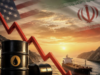
As of Monday, May 4, 2026, the global energy market is no longer speculating on a "worst-case scenario." It is living in it. Following the military escalation between Iran and Israel that began in late February, the Strait of Hormuz has transformed from a vital artery of global commerce into a tactical noose. With Brent crude hovering stubbornly at $115 per barrel, the corporate world is facing a reality where the "inflation pivot" has been replaced by a "war premium" that shows no signs of receding.
At MBQ Magazine, we track the metrics that matter to the modern executive. Right now, those metrics are measured in tankers, barrels, and the price of safety.
The Logistics of the Blockade
The Strait of Hormuz is only 21 miles wide at its narrowest point. Through it passes roughly 20% of the world's liquid petroleum and nearly a third of global liquefied natural gas (LNG). When Iran effectively closed the passage on March 1, 2026, it didn't just stop traffic; it broke the global supply chain.
Reports from the ground confirm that the 16 million barrels of oil that usually flow through this corridor daily are now stranded or diverted. Major producers like Kuwait and the UAE have been forced to throttle production as on-shore storage capacities hit their limit. This isn't a supply shortage in the traditional sense; it is a physical blockade. Even as the U.S. Navy maintains a persistent presence in the Gulf, the risk premium on tanker insurance has made transit prohibitively expensive for all but the most desperate buyers.

Why $115 is the New Floor
For months, analysts predicted that the market would eventually find equilibrium. After Brent crude spiked to $126 following the March 18 strikes on Iran’s South Pars gasfield, there was a temporary retraction. But the $115 mark has become a psychological and structural floor.
The "Reported Reality" is that the 2026 interest rate pivot is dead. The Federal Reserve, which had been hinting at cuts to stimulate a cooling economy, is now boxed in by "sticky" energy inflation. In the U.S., average gasoline prices have climbed to $4.30 per gallon. For the business owner, this isn't just about the cost of a commute; it’s about the rising cost of freight, manufacturing, and raw materials.
When energy goes vertical, margins vanish. Companies that didn't lock in fuel hedges in late 2025 are now bleeding cash. This shift is explored deeply in our Business Strategies section, where we analyze how top-tier firms are restructuring their supply chains to bypass Gulf-dependent logistics.
Safe Havens: Gold’s $4,600 Pivot
In times of kinetic conflict, capital seeks the tangible. Gold has shed its status as a "boring" asset and returned to the center of the financial stage. With support now firmly established at $4,260, the move toward $4,600 and beyond is driven by central banks aggressively diversifying away from the U.S. dollar.
The logic is simple: when the dollar is weaponized through sanctions and naval blockades, institutional investors move into bullion. The current Financial Authority reports show that gold is exhibiting an 80% inverse correlation to the dollar index. This isn't speculation; it's a structural shift in global reserve management.

For the modern businessman, the directive is clear: Gold is the ultimate hedge against a fractured world. If you aren't holding a physical or highly liquid gold position, you are exposed to the volatility of a currency that is currently tethered to the stability of the Middle East: a stability that no longer exists.
The Bitcoin Buffer: Digital Gold or High-Beta Play?
While gold represents the traditional safe haven, Bitcoin has carved out a unique, albeit more volatile, position in this conflict. Trading around $68,000, Bitcoin is acting as a "buffer" for those who want safe-haven properties with the liquidity of a digital asset.
However, the "Reported Reality" is more nuanced. While some see BTC as "Digital Gold," its performance during the March 1-4 blockade showed a high correlation with tech stocks initially, before decoupling as the conflict prolonged. Bitcoin’s scarcity advantage is real, but its volatility makes it a tactical play rather than a foundational one.
Forward-thinking investors are using Artificial Intelligence to navigate these micro-volatilities, using predictive algorithms to trade the gap between geopolitical headlines and market reactions.
The Diplomatic Stall
In the background of the military posturing, a shadow game of diplomacy is being played. Reports indicate a secret peace proposal was recently routed from Tehran to Washington D.C. via Pakistani intermediaries.
The question for the markets is whether this is a genuine exit ramp or a tactical stall. History suggests the latter. Iran has used negotiations to buy time before, and as long as the Hormuz chokehold remains a viable lever, they are unlikely to release it without significant concessions. For the executive, this means you cannot plan your Q3 or Q4 around a "peace deal." Plan for the blockade.

Tactical Strategies for the Modern Executive
Operating in a $115 oil environment requires a shift in mindset. You are no longer in a growth-at-all-costs phase; you are in a resilience phase.
- Hedge Your Energy Exposure: If your business is logistics or manufacturing heavy, investigate futures or options to cap your exposure to further energy spikes.
- Diversify Your Reserve: Follow the central banks. Move a portion of your liquid capital into gold or high-grade commodities that thrive in inflationary war environments.
- Audit Your Supply Chain: If your primary suppliers rely on shipping through the Persian Gulf, start the transition to land-based or Atlantic-based alternatives now. The Cultural shift in global trade is moving toward localized hubs.
- Adopt Predictive Tools: Use AI-driven analytics to monitor real-time shipping data and geopolitical sentiment. In 2026, the information gap is where the profit: or loss: is made.
The Bottom Line
The Hormuz Chokehold isn't just a news headline; it is the defining economic reality of 2026. $115 oil is the price of a world in transition. The ambitious businessman doesn't wait for the conflict to end; he adapts to the friction.
Stay informed. Stay hedged. The board has moved.
For more in-depth analysis on market trends and wealth-building strategies in volatile times, visit the MBQ Magazine Featured section.