

For decades, the youth-basketball economy worked the same way. Tournament organizers sold the tickets. Shoe companies sold the shoes. Trainers, recruiters, and media outlets all built businesses around teenage talent. The one party who could not be paid was the player himself.
That structure is now being challenged from inside — by two of the most successful businessmen the game has produced.
A league built for the top 120
The Futures Basketball League, announced Tuesday, is a new national league for the top under-18 boys basketball players in the United States. It launches in April 2027, with a season running April through August across 10 weekends. One hundred twenty prospects — drawn from the high school classes of 2028 through 2031 — will play on 12 regional teams. MADE Hoops, an established name in grassroots basketball, is the operations partner running the league day to day.
The calendar is deliberate. Ten weekends, April through August, places the league inside the heart of the grassroots season without asking families to choose between it and the school year. The classes involved — 2028 through 2031 — mean the league is recruiting players before the recruiting industry fully gets to them, some as early as their first year of high school. For the families of elite players, that timing carries weight: the first serious business relationship in a young man’s basketball life would be with a league that pays him and offers him ownership, rather than with a circuit that profits from him for free.
On its own, a new youth league is not news. What makes this one different is who is behind it, and what the players receive.
Players get paid — and offered ownership
Every player in the league will earn NIL compensation: cash for his name, image, and likeness. That alone separates the FBL from the traditional grassroots model, where a player’s value moved through everyone else’s hands first.
But the league goes a step further. Players will also be offered equity in the league itself, subject to approval. Read that carefully. These are teenagers, most of them years from signing a professional contract, being positioned not just as paid talent but as owners — with a financial stake in the enterprise their talent makes valuable.
The distinction matters. A paycheck ends when the season ends. Equity compounds. For a generation of young athletes being taught, often painfully late, that a career is short and a contract is not wealth, that is a different kind of lesson — delivered at 16 instead of 26.
The men building the table
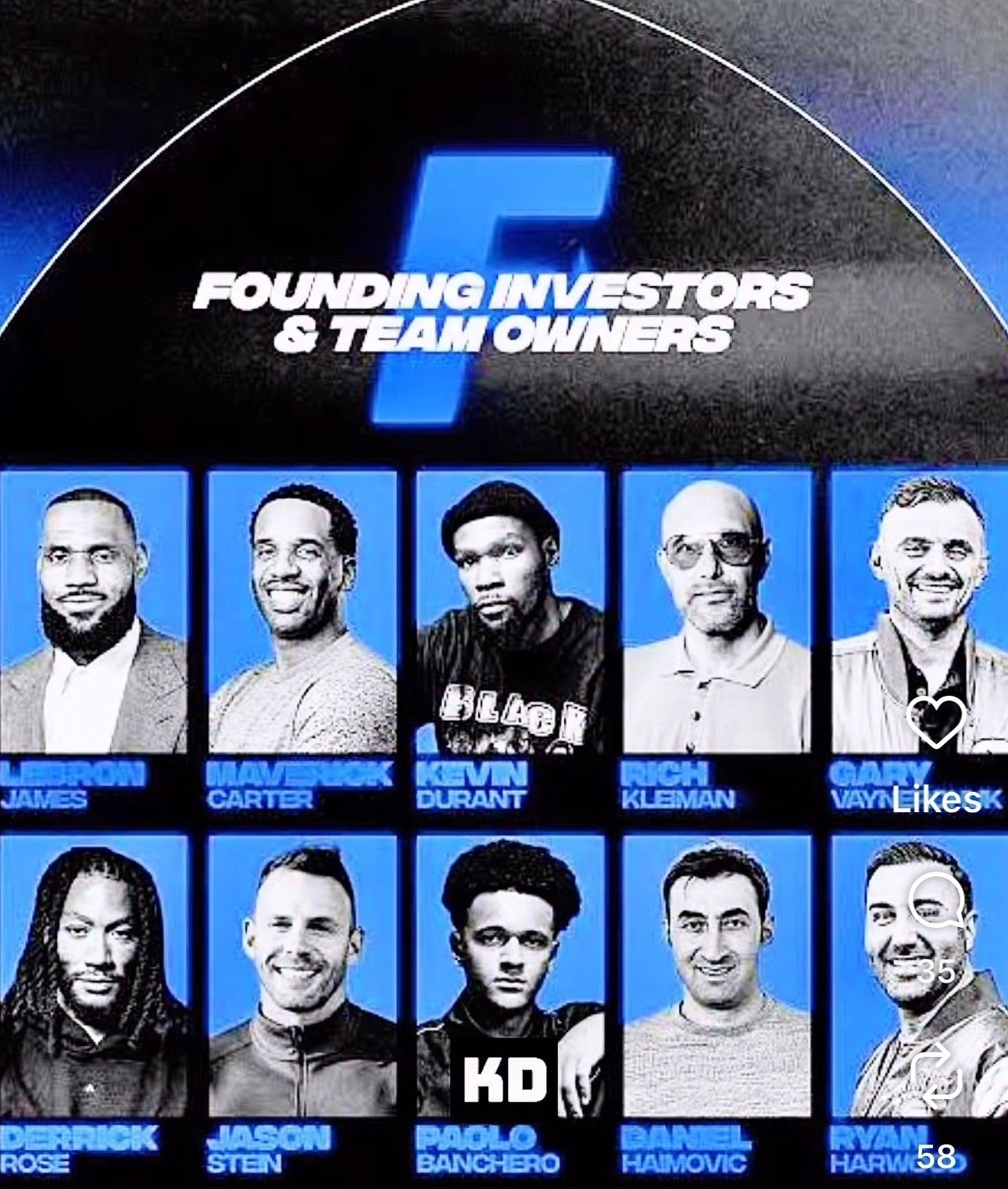
The founding partners tell you what this league intends to be. LRMR Ventures — LeBron James and Maverick Carter’s company — is a founding partner. So is Boardroom Sports Holdings, Kevin Durant and Rich Kleiman’s company. Team owners include Derrick Rose and Paolo Banchero. Other backers include Gary Vaynerchuk, Ryan Harwood, Ezra Kucharz, and SC Holdings, led by Jason Stein.
James and Durant are not lending their names to this. Their companies are in the structure. Both men built their fortunes the modern way: not from salary alone, but from the businesses, media companies, and investment vehicles constructed around their playing careers. Carter and Kleiman, their respective partners, are two of the most respected operators in athlete business.
What they are building here is the on-ramp they never had. The stars of one generation are constructing the table for the next one — and putting equity on it.
What it signals
The FBL arrives at a moment when the economics of young athletic talent are being renegotiated at every level. NIL changed college sports. The question hanging over youth sports is who captures the value a gifted 15-year-old already creates — the ecosystem around him, or the player and his family.
This league is a direct answer. It does not ask the old system for permission. It builds a competing one, funded by men who know exactly how the old one worked, because they were its product.
There are real questions ahead — how the equity is structured, what approval it requires, and whether the model survives contact with the realities of youth sports. Those answers will come between now and April 2027. But the direction is clear, and it is being set by the athletes themselves.
For the fathers, uncles, and coaches reading this — the men who drive the early-morning practices and pay for the travel teams — the lesson is the oldest one in business, now arriving earlier than ever: the money is not only in playing the game. It is in owning a piece of it.
Health. Wealth. Self.