
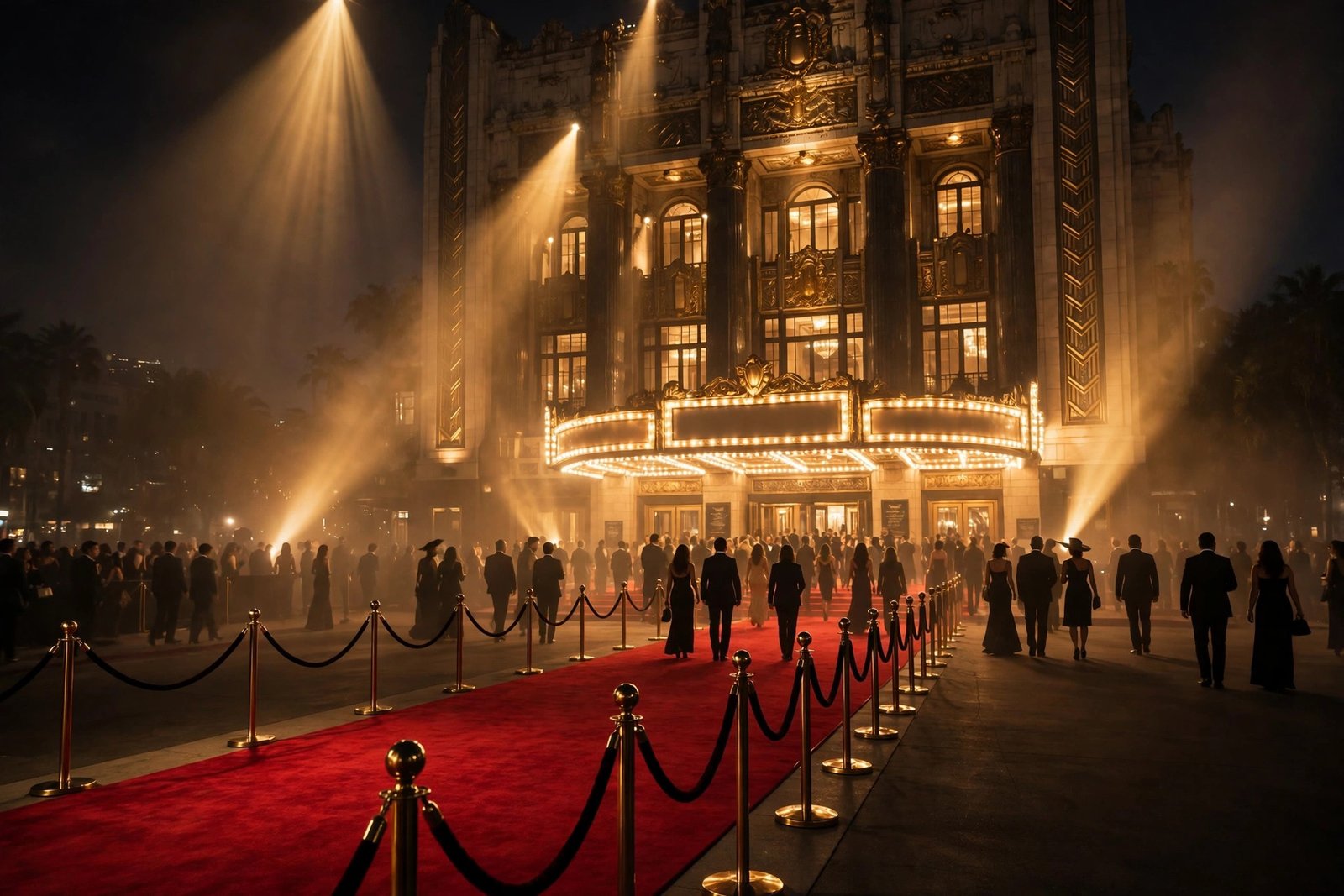
On Monday night, the Hollywood Palladium filled with the people shaping Black America — and the message of the evening was not about fame. It was about ownership.
EBONY’s 2026 Power 100, held November 9 in Los Angeles under the theme “The Stories We Shape,” honored the leaders, visionaries and changemakers moving culture across business, entertainment, sports, media, music, STEM and community leadership. The magazine has carried that mission for more than 80 years, since John H. Johnson founded it in 1945. This year’s class — Jay-Z, Megan Thee Stallion, Alicia Keys, Swizz Beatz, Naomi Osaka, Jalen Brunson and Keke Palmer among them — made the point plainly: the people telling the story are increasingly the people who own it.
Actress and singer Tisha Campbell hosted the evening. Twenty-time Grammy winner Kirk Franklin opened the show with “Revolution.” Tyrese had the room on its feet with “Sweet Lady” and “How You Gonna Act Like That.” Grammy-winning rapper and entrepreneur T.I. closed the night with his 2026 Pharrell-produced track “Let ‘Em Know,” then took it back to 2008 with “Whatever You Like” before finishing a cappella. It was a celebration. But between the performances, the business of the night kept breaking through.
The night’s center of gravity: Byron Allen
The most pointed business moment belonged to media mogul Byron Allen, founder, chairman and CEO of Allen Media Group. EBONY CEO Eden Bridgeman presented Allen with the Junior Bridgeman Business Vanguard award, named for the former NBA player who became a business mogul after basketball — a man Allen described as his good friend and close mentor.
Allen traced his own start to the days he joined his mother at work because she could not afford childcare, and said that experience was the push behind his business career. He then spoke about his high-stakes lawsuits under the Civil Rights Act — cases he said delivered $50 billion from major corporations — and about his push for economic inclusion for Black America.
That is the through-line of the whole evening. Allen did not build his company by asking for a seat. He built it, bought it, and then used the courts to make the biggest companies in America pay for shutting Black-owned media out. The award’s namesake did the same thing a generation earlier, turning a playing career into an empire. Ownership, in both cases, was not a slogan. It was the strategy.
Athletes and artists as owners
The rest of the Power 100 Court told the same story in different industries. Seattle Storm WNBA player and artist Flau’Jae Johnson took the stage with her mother, Kia J Brooks, and her younger brother Adin, and described a dream that sums up the new athlete economy: playing a WNBA game in the same stadium that would hold her sold-out show the same night. She is not choosing between the court and the stage. She is building both, at once.
Digital influencer and culinary tastemaker Keith Lee was honored for turning an honest phone camera into real economic power — the kind that moves lines outside small restaurants and changes a family’s fortunes in a weekend. Emmy-winning writer, producer and actor Lena Waithe, presented by director Gina Prince-Bythewood, is the first Black woman to win the Primetime Emmy for Outstanding Writing for a Comedy Series, for “Master of None” in 2017. “There is no me without you,” she told Prince-Bythewood onstage — a reminder that ownership of the work still starts with who opened the door.
NASA Astronaut Emeritus Victor Glover, presented by former NASA scientist and Blue Origin astronaut Aisha Bowe, used his moment to talk about opening doors wider in science, technology and innovation. Singer and actress Brandy, presented by Coco Jones, reflected on self-image, grief and pain, and on the journey behind her memoir, “Phases.” “Tonight I can feel the weight of what I’ve accomplished without making myself feel smaller,” she said.
And the People’s Choice Award went to Maleah Joi Moon of “A Different World,” who called EBONY “a movement” — a project made, in her words, to “inspire hope.”
Why it matters
EBONY CEO Eden Bridgeman closed the evening by saying what the room already knew: “Celebrating the Black leaders moving our culture forward is central to EBONY’s mission, and last night was a true reflection of that mission. We are honored to have such an influential class of individuals in one room to share their stories and celebrate such incredible achievements.”
Here is the part worth sitting with. For decades, Black talent made the culture and someone else owned the business around it — the label, the network, the league, the platform. The 2026 Power 100 is a room full of people who refused that arrangement. Jay-Z, Megan Thee Stallion, Alicia Keys and Swizz Beatz, Naomi Osaka, Jalen Brunson, Keke Palmer — musicians, athletes and actors who treat their name as a company, not just a credit. Allen, who sued his way to the table and then bought the table. Johnson, who will not pick one lane. Lee, who turned taste into leverage.
The theme said it best: “The Stories We Shape.” The story is the asset. Whoever shapes it, owns it. And whoever owns it decides what it is worth.
Health. Wealth. Self. That starts with the story you tell about yourself — and who gets paid when it is told.
Sources: EBONY Media Group via PR Newswire, November 10, 2026. Full honoree list at EBONY.com/Power100.