
In 1939 a president tried to move Thanksgiving to sell more Christmas presents. The country revolted, Congress stepped in, and retail lost the battle. Then retail quietly won the war. Here’s what every entrepreneur can learn from the strangest holiday fight in American history.
The problem: a calendar that cost money
Since Abraham Lincoln’s 1863 proclamation, Americans had mostly celebrated Thanksgiving on the last Thursday of November. Most years that worked fine. But November 1939 had five Thursdays, which pushed the holiday all the way to November 30.
That was a real problem for store owners. Back then, there was an unwritten rule: you didn’t decorate for Christmas or advertise Christmas sales until Thanksgiving was over. A late Thanksgiving meant a short shopping season. And in 1939 the country was still climbing out of the Great Depression, after a fresh downturn in 1937 and 1938. Every shopping day counted.
So the retail lobby went to the White House. Their ask was simple: give us one more week.
The move: “Franksgiving”
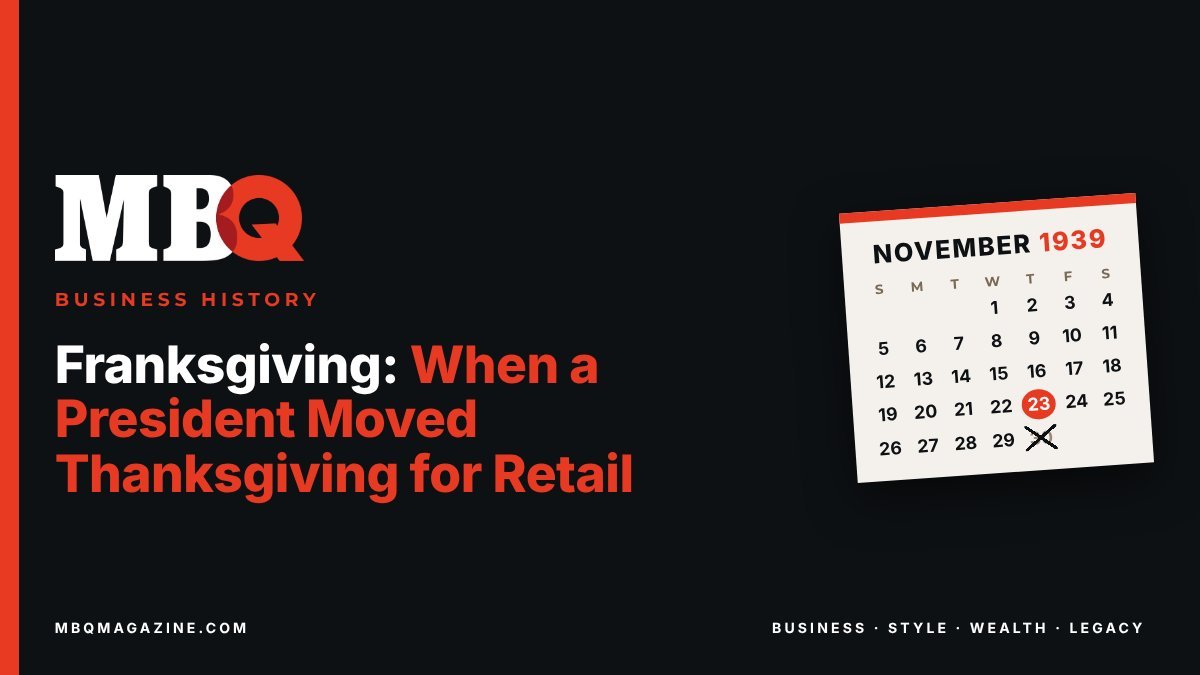
In August 1939, almost as an afterthought at the end of a press conference, President Franklin D. Roosevelt announced that Thanksgiving would come one week early that year, on November 23. Big retailers celebrated. Almost everyone else got angry.
A Gallup poll found about 62% of voters opposed the change. Atlantic City’s mayor mocked it as “Franksgiving,” and the name stuck. Calendar makers had already printed the old date. Football schedules, built around Thanksgiving games, were thrown into chaos. Families who lived in different states couldn’t agree on which Thursday to eat turkey. Even some small shop owners wrote to the president to complain. They felt the change helped the department stores, not them.
Because Thanksgiving dates were set by each governor, states picked sides. In 1939, roughly half the country followed the president and the rest kept the old date. In 1940 Roosevelt did it again, and 32 states went along while 16 held out. For two years, America literally had two Thanksgivings.
The result: it didn’t work
Here’s the part most people never hear. The extra week didn’t produce a clear sales boost. Results were mixed at best, and the data didn’t show the payoff retailers had promised. Facing the confusion and weak results, Congress settled it in 1941: Thanksgiving would fall on the fourth Thursday of November, by law, every year. That’s the rule we still follow today.
Washington tried to change the calendar to create demand. The people refused, and the calendar won.
The twist: retail won anyway
Now look at 2026. Nobody needs a president to move Thanksgiving, because retailers stopped waiting for it. The shopping season now starts in October, and early deals pull holiday spending weeks before the turkey is carved. The old rule against “Christmas creep” is long gone.
And the numbers are enormous. The National Retail Federation (NRF) projects holiday sales this November and December will reach about $1.013 trillion, up 4.2% from last year. It’s the first time the season is expected to cross the trillion-dollar mark. NRF says roughly 126 million people plan to shop on Black Friday alone. Adobe expects a record $275 billion in online holiday spending, with Black Friday online sales growing faster than Cyber Monday.
The lesson is hiding in plain sight. Roosevelt tried to win by forcing people to change a tradition. Retailers eventually won by leaving the tradition alone and simply starting the season earlier. They changed the offer, not the holiday.
The MBQ playbook: 5 lessons from Franksgiving
1. Timing is a strategy. In 1939, one week on the calendar was worth fighting the whole country over. When you launch, raise prices, hire or ask for the deal matters as much as what you’re selling. Map your year around when your customers have money and motivation.
2. Don’t fight culture head-on. FDR had the most powerful office in the world and still lost to tradition. If your plan requires customers to give up something they love, expect resistance. Find a way to add to their habits instead of replacing them.
3. Watch who the “help” really helps. The 1939 change was pushed by big retailers, and small merchants felt left out. When an industry group lobbies for a rule, ask who it was written for. Policy, platforms and partnerships often favor the biggest players by design.
4. Create your own day. Small businesses eventually stopped asking for a better calendar and made their own: Small Business Saturday, launched in 2010, now sits right between Black Friday and Cyber Monday. You can do the same. Your anniversary sale, your annual drop, your customer-appreciation week. Own a date your customers look forward to.
5. Gratitude before the sale. Thanksgiving survived every attempt to rush it because people value it. Before you push this weekend’s offer, thank the clients, team members and partners who carried you this year. A thank-you note today builds the trust behind next year’s sale.
The bottom line
Franksgiving failed because it tried to command demand from the top down. Today’s trillion-dollar season works because businesses learned to meet people where they already are. Build your business the same way: respect the tradition, own your timing, and give people a reason to show up.
Happy Thanksgiving from all of us at MBQ. Enjoy the table today. The deals can wait until tomorrow.
Up next on MBQ: Here’s a fun fact. The same year Roosevelt moved Thanksgiving, a Chicago department store gave away a free holiday booklet about a reindeer with a red nose. That giveaway became one of the most valuable characters in Christmas history. In our next story, we look at what classic children’s books teach about success, and why the best time to teach your kids about business is before bedtime. Read: Bedtime Stories, Boardroom Lessons →