
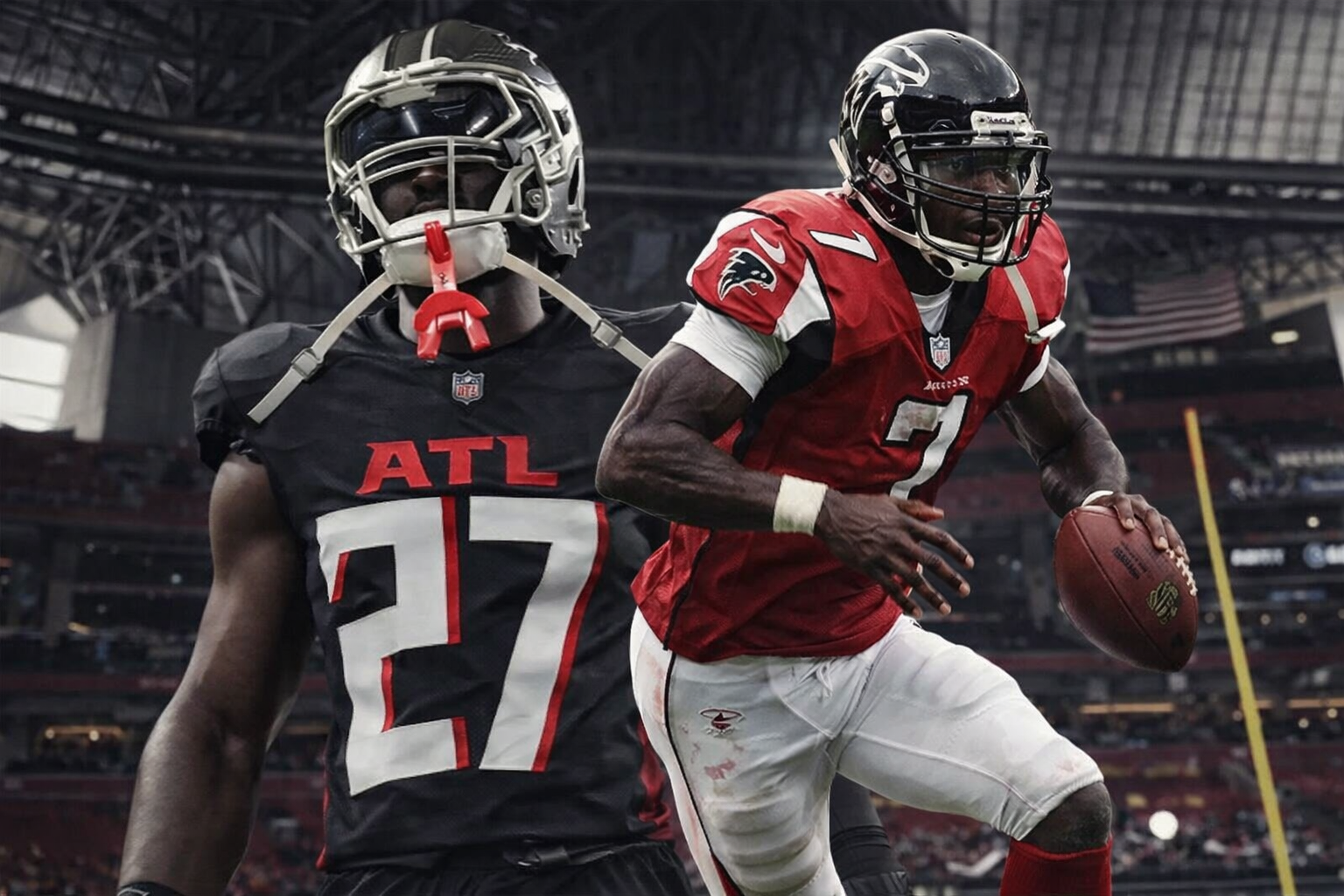
This moment isn’t a replay of the past—but how the Falcons respond to James Pearce will show whether the lessons of that past were learned.
The city is watching.
Although this moment is not the same as the Michael Vick era—nor should it be treated as such—Atlanta is paying close attention to how the Falcons respond to James Pearce. The city remembers what it looks like when immense talent collides with institutional responsibility, and it understands that the true measure of a franchise isn’t found in denial or overreaction, but in clarity, consistency, and care. This isn’t about reliving the past; it’s about whether the lessons of that past have actually been learned. How the Falcons choose to handle this moment will say less about Pearce’s future and far more about the organization’s commitment to accountability, growth, and its relationship with the community it represents.
Promise on the Field, Expectations in the City
James Pearce arrived with the kind of promise that NFL franchises build narratives around. On the field, his talent was evident early—athleticism, explosiveness, and a presence that suggested upside rather than limitation. He looked like a player who could grow into his role, not merely fill it. For a Falcons team still shaping its identity, Pearce represented potential aligned with progress.

Atlanta noticed because Atlanta always notices potential.
This is a city that understands development. It understands the long road from promise to fulfillment, whether in business, music, politics, or sports. Falcons fans, in particular, have learned to be cautious with their optimism. They’ve lived through rebuilds, resets, and seasons that promised more than they delivered. So when excitement forms around a player, it’s rarely shallow. It’s measured, hopeful, and rooted in the belief that something better might finally be taking shape.
Pearce became part of that belief—not as a savior, but as a symbol. And symbols, fairly or not, carry weight beyond their individual actions.
The Moment That Changes the Conversation

Then comes the disruption—the moment that shifts the conversation from performance to responsibility.
These moments are uncomfortable because they interrupt momentum. They force organizations to pause, assess, and respond under scrutiny. Fans often want clarity immediately, while institutions instinctively move toward caution. That tension is where trust is either strengthened or eroded.
Atlanta has seen what happens when franchises mishandle these crossroads. Not because the situations were identical, but because the responses revealed deeper truths about leadership, values, and priorities. The city understands that no organization can control every action of every individual. What it can control is how it responds when challenges arise.
This is where the Falcons now stand.
Why the Vick Era Still Matters—Without Repeating It

Mentioning Michael Vick in Atlanta is never casual. It doesn’t need to be. His era remains one of the most significant chapters in the city’s sports history—not only because of what happened, but because of what it forced the organization and the fanbase to confront.
That period was a lesson in how charisma and talent can coexist with blind spots, and how institutions sometimes fail to intervene until consequences become unavoidable. It reshaped how Atlanta views accountability, especially when Black athletes are elevated to iconic status without adequate support, boundaries, or oversight.
But to be clear: James Pearce is not Michael Vick, and this situation is not a replay. Drawing that distinction matters. Lazy comparisons help no one. What does matter is that the Falcons now have the benefit of hindsight. They have institutional memory. They have an opportunity that didn’t exist in the same way years ago: the chance to respond early, thoughtfully, and transparently.
That is the lesson worth applying—not the scandal, not the downfall, but the response.
Atlanta’s Black Community Is Watching Closely
Atlanta is a majority-Black city with a deep understanding of how Black excellence is celebrated, scrutinized, and often weaponized. Black athletes are frequently placed in impossible positions—expected to represent perfection while navigating systems that are quick to distance themselves when complications arise.
This is why moments like this resonate beyond sports talk radio and social media debates. They touch on trust, representation, and respect.
The Falcons are more than a football team in this context. They are a civic institution. Their actions signal values, priorities, and awareness. When the organization speaks—or chooses not to—it sends a message not just to fans, but to communities who have long memories and clear expectations.
Atlanta isn’t asking for public shaming. It isn’t demanding overcorrection. What it expects is seriousness. Presence. Follow-through. Evidence that lessons from the past weren’t just endured, but internalized.
Accountability Is a Process, Not a Statement
Too often, organizations confuse accountability with announcements. A press release is issued. A policy is referenced. A few carefully selected words are delivered. Then the news cycle moves on.
But accountability isn’t a moment—it’s a process.
It’s seen in how consistently standards are applied. In whether support systems are strengthened rather than quietly ignored. In whether the organization communicates with clarity instead of retreating behind legal language. And in whether actions match stated values over time.
For the Falcons, this means understanding that how they handle James Pearce now will shape perceptions long after this specific situation fades. It will influence how future players view the organization, how the city evaluates leadership, and how much credibility the franchise carries when it speaks about culture and responsibility.
This Is an Opportunity—If They Choose It
The most important truth about this moment is also the simplest: it didn’t have to be defining, but it can be instructive.
The Falcons are not being judged for perfection. They are being observed for intention. Atlanta wants to see whether this organization can demonstrate growth—real growth, not rhetorical growth.
That means showing care for the individual without losing sight of the collective. It means acknowledging complexity without hiding behind it. It means acting like a franchise that understands its influence and is willing to lead with maturity.
This is not about punishment. It’s about precedent.
What Leadership Looks Like Now
Leadership, in this moment, looks like calm decisiveness. It looks like transparency without spectacle. It looks like engaging the community rather than insulating from it. And it looks like making choices that reflect long-term values rather than short-term optics.
Atlanta has seen what happens when organizations get this wrong. It has also seen what’s possible when they choose to do better.
The Falcons now have a chance to demonstrate that they’ve learned—not just from history, but from the city they represent.
A City That Remembers—and Expects More
Atlanta doesn’t forget its stories. It carries them forward, not to punish, but to inform. The past is not a shadow here; it’s a reference point.
This moment with James Pearce is not a verdict. It’s a test. One that asks whether the Falcons understand the responsibility that comes with promise, the weight that comes with belief, and the trust that comes with representing a city like Atlanta.
They have a chance to get it right.
The city is watching—not with anger, but with expectation.