Date: December 15, 2025 Topic: Technology / Geopolitics / Markets Companies: Nvidia (NVDA), Alibaba (BABA), ByteDance, TSMC
For years, the rules were clear: advanced American AI chips were not going to China. Not directly, not legally, not at scale. That wall, painstakingly built across two administrations, cracked this week.
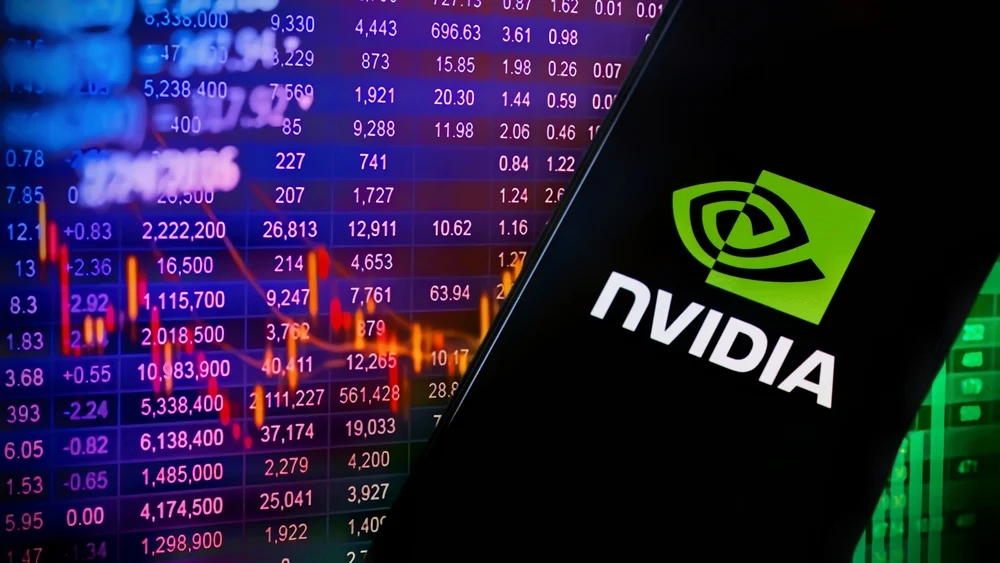
Nvidia, the most consequential company in the artificial intelligence boom, is now preparing to sell its H200 chips into the Chinese market after the Trump administration quietly swapped prohibition for something more transactional. Under the new policy, certain high-end chips can be exported—so long as buyers pay a 25 percent surcharge straight to the U.S. Treasury.
It is less a thaw than a toll booth.
The decision has set off a rush among China’s largest technology companies. Alibaba. ByteDance. Tencent. All are said to be circling Nvidia, eager to secure supplies of a chip that, while no longer the company’s most advanced, remains powerful enough to reshape their AI ambitions.
And once again, Nvidia finds itself where it seems to live now: at the fault line between geopolitics and markets, trying to sell silicon in a world that no longer agrees on the rules.
For Washington, the logic is blunt. Chinese companies, officials argue, have been getting their hands on restricted chips anyway, routed through intermediaries and gray markets. If the flow cannot be stopped, the thinking goes, it might as well be taxed. Better to collect revenue, preserve leverage, and keep China tethered to Nvidia’s software ecosystem than to pretend isolation still works.
Critics are unimpressed. The H200 is not a toy. It is capable of training large-scale models with clear military and surveillance applications. And for companies backed by the Chinese state, a 25 percent markup is unlikely to change much beyond the accounting.
In China, the urgency is real. Domestic chipmakers have made progress, but not at the scale or consistency required to train the enormous models now defining the global AI race. Companies have been compensating by stitching together vast numbers of older chips, an approach that is expensive, inefficient, and increasingly uncompetitive.
The H200 offers relief. It is faster, more memory-rich, and far easier to deploy. For firms trying to keep pace with the latest models coming out of Silicon Valley, access to it is the difference between months and years.
But Nvidia cannot simply meet the demand. Its manufacturing partner, TSMC, is already stretched thin producing next-generation chips for American cloud giants. Any meaningful increase in H200 output would require trade-offs—reviving older production lines, paying premiums for scarce capacity, or reshuffling commitments to other customers.
Each option carries consequences.
Inside Beijing, the debate is no less uneasy. Relying again on American chips runs counter to years of policy aimed at technological self-sufficiency. Yet allowing national champions to fall further behind in artificial intelligence is politically risky. One idea under discussion would force companies buying Nvidia chips to also purchase domestic alternatives, a hedge against dependence and a subsidy by another name.
For investors, the picture is similarly conflicted. Reopening China, even partially, could restore billions in revenue and help Nvidia monetize chips that are no longer at the cutting edge. At the same time, the policy rests on unstable ground. A single shift in political winds could slam the door shut again.
There is also the reputational risk. If Nvidia hardware turns up in sensitive military applications, the backlash would be swift and severe.
None of this looks like reconciliation. It looks like a recalculation.
The United States has decided that selling controlled access—at a price—is preferable to enforcing a leaky blockade. China is deciding how much dependence it can live with to stay competitive. And Nvidia is doing what it has done throughout the AI boom: trying to grow, carefully, in a world that keeps rewriting the rules around it.
The new cold war is not being fought only with bans and blacklists anymore. Increasingly, it is fought with purchase orders, tariffs, and uneasy compromises.
And this week, the bill came due.