

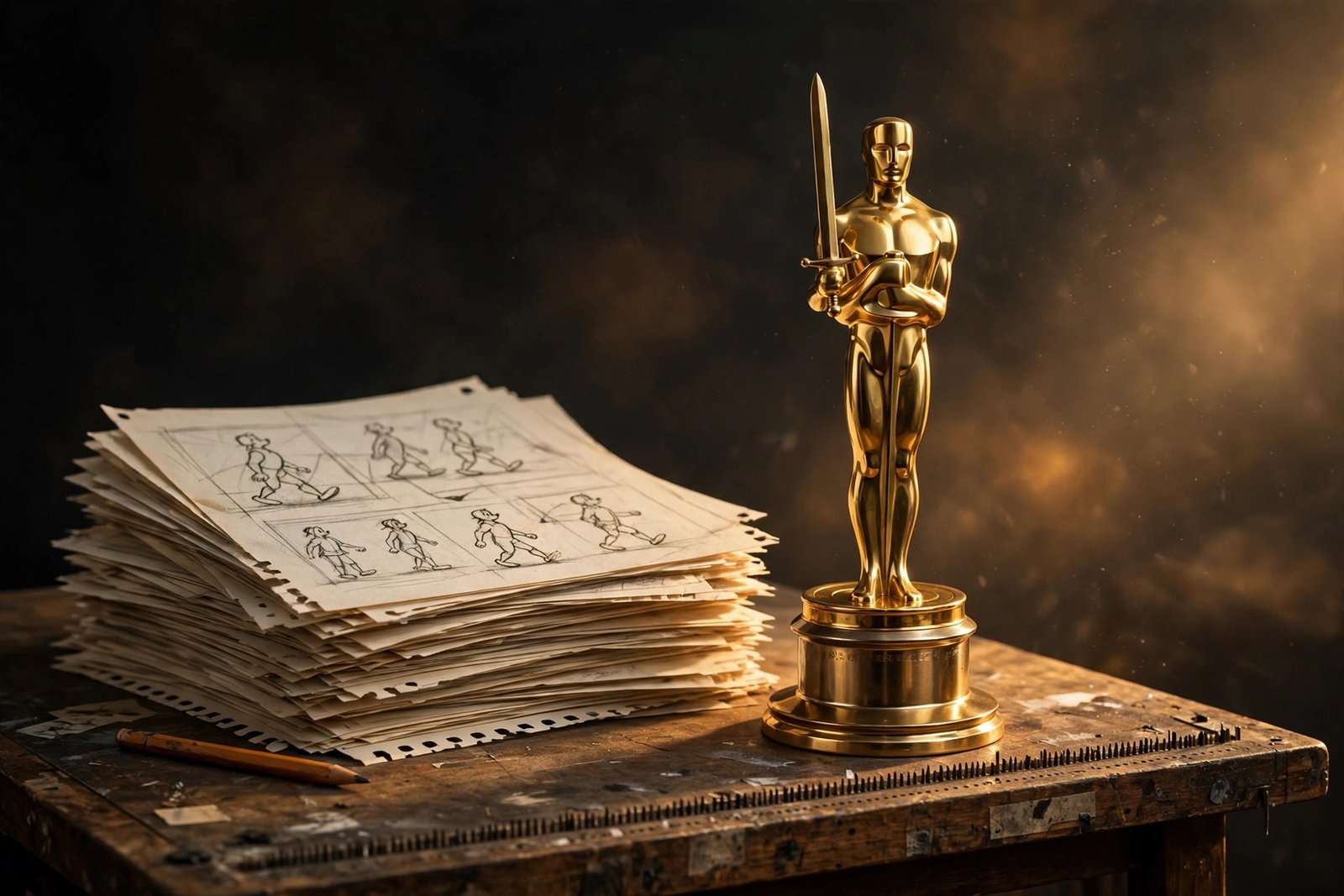
Tomorrow night, in a ballroom in Hollywood, a 91-year-old man will walk up and accept an Oscar — seventy years after he walked into Walt Disney Studios as a 21-year-old kid who just wanted to draw.
Floyd Norman receives an Academy Honorary Award at the 17th Governors Awards on Sunday, November 15, at the Ray Dolby Ballroom at Ovation Hollywood. He will share the stage with Glenn Close and Ridley Scott, who receive honorary Oscars of their own, and producers Christine Vachon and Pamela Koffler, who take the Thalberg Memorial Award.
Norman is only the fourth animator in the history of the Academy to receive an honorary Oscar. The other three are Walter Lantz, Chuck Jones, and Hayao Miyazaki. That is the entire list. Now it has a Black man on it.
The kid who stayed
Norman joined Walt Disney Animation Studios in 1956, becoming the studio’s first Black animator. He was 21. His first feature was Sleeping Beauty. From there his credits read like a tour of the films most of us grew up on: The Sword in the Stone, Mary Poppins, The Jungle Book, Robin Hood. Decades later he was still at it — The Hunchback of Notre Dame, Mulan, Toy Story 2, Monsters, Inc. — a run that carried him from Disney’s golden age into the Pixar era.
The Academy announced the honor in June. Its president, Lynette Howell Taylor, called Norman “the legendary animator who has broken barriers and inspired generations of artists over his remarkable career.”
He did not just survive in an industry that barely hired Black artists for creative work. He stayed. For 65 years and counting, he kept drawing, kept mentoring younger animators, kept showing up to the studio. In 2007 Disney named him a Disney Legend. In 2016 his life became the documentary Floyd Norman: An Animated Life. On Sunday morning, before the ceremony, CBS News Sunday Morning airs a profile of him — Faith Salie telling his story to the whole country on the very day Hollywood finally hands him the statuette.
He did not wait for permission to own something
Here is the part of Norman’s story that belongs in a business magazine.
After Walt Disney died, Norman left the studio and co-founded Vignette Films with his friend and fellow animator Leo Sullivan. It was one of the first Black-owned production companies in Hollywood. They made animated films about Black history — for schools, for kids who had never seen themselves drawn as heroes in a cartoon.
Read that again. In an era when Black animators could barely get hired, two of them built their own company and made the work the big studios would not. They did not ask for a seat. They built a table and put their own stories on it.
That is the ownership play, and Norman has been running it for half a century. Disney’s retirement policy moved him off staff at 65. He kept working anyway — returning to the studio as a freelancer into his 80s, mentoring, drawing, telling the history he lived. The job ended. The work did not.
What seventy years teaches
There is a temptation to file this story under “feel-good Hollywood moment” and move on. That would miss the point.
Norman’s career is a case study in the long game. He did not get rich quick. He did not go viral. He got very good at a craft, stayed in the room for decades, built something of his own when the room would not make space, and outlasted every gatekeeper who decided what a Black animator was allowed to be.
The honor coming at 91 is not a consolation prize. It is what happens when the work is undeniable for long enough that the institution has to catch up. Seventy years is a long time to wait for recognition. It is also proof that recognition was never the point. The point was the work — and the work is still standing.
For anyone building something now — a business, a brand, a body of work — Norman’s story asks a plain question: are you building for the applause this year, or for the shelf life of seventy years?
A check pays you for showing up. A legacy pays the people who come after you. Norman drew the films your parents watched, then the ones your children watched, then helped teach the animators drawing the ones your grandchildren will watch. That is what ownership of a craft looks like.
Tomorrow night, when he holds that statuette, it will not just be an award for one man. It will be Hollywood admitting, on the record, that the kid who walked in the door in 1956 belonged there all along.
Health. Wealth. Self. The self part is knowing your worth before anybody else does — and doing the work until they cannot deny it.
Sources: Academy of Motion Picture Arts and Sciences press release, June 10, 2026; Cup of Soul, November 14, 2026; CBS News Sunday Morning listing, November 15, 2026; Variety, June 10, 2026.