
By Frank Lewis
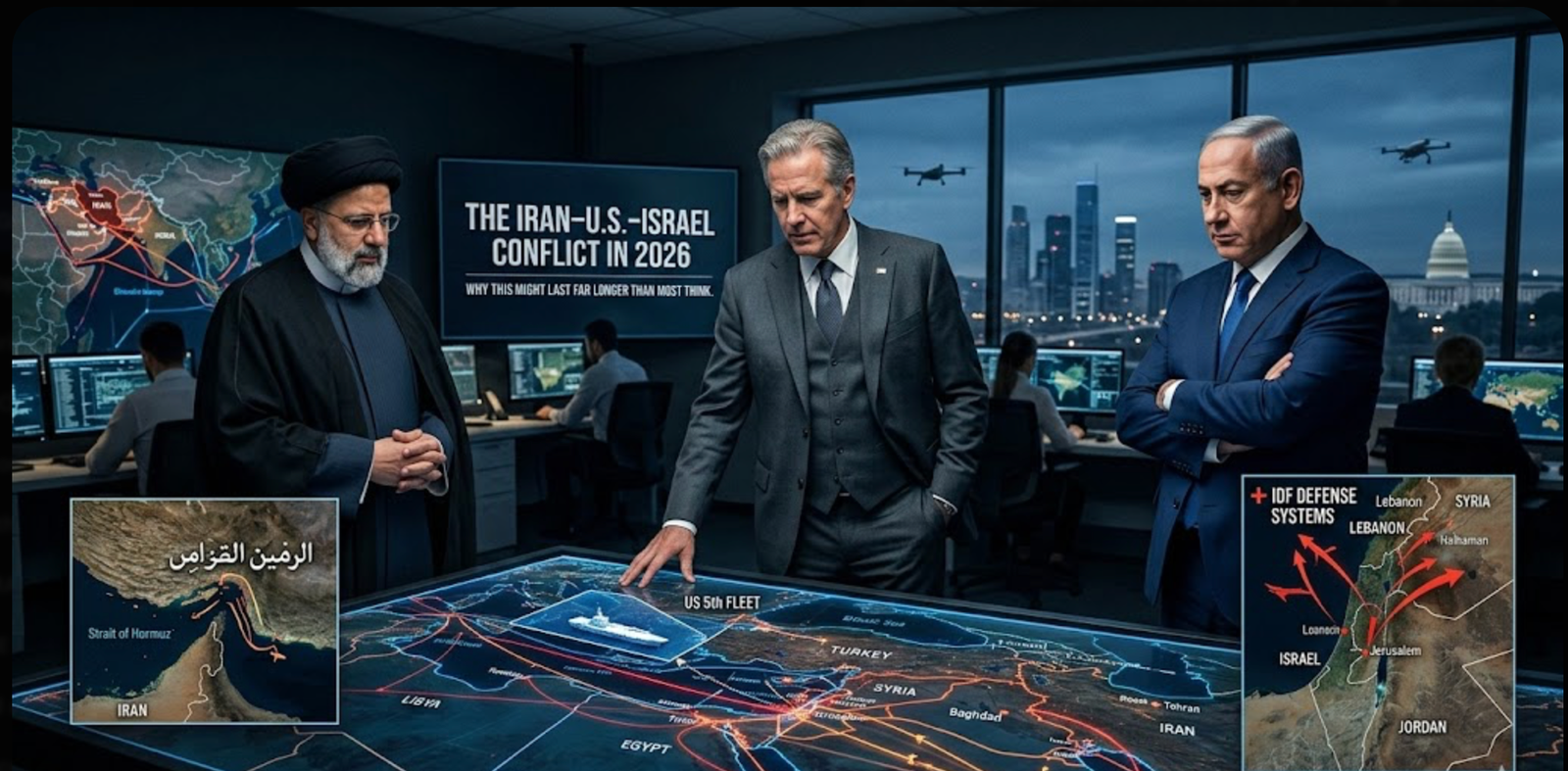
On February 28, 2026, the Middle East entered a new phase of conflict that could have multi-decade economic and investment consequences.
In a coordinated operation codenamed Operation Lion’s Roar, United States and Israeli forces launched major airstrikes against Iran, targeting military infrastructure, nuclear-related facilities, and key leadership figures. The offensive marked one of the most significant escalations between Tehran and the West in decades.
The Spark: Trump, Netanyahu, and Regime Change
President Donald Trump framed the operation as a “major combat operation” aimed at disabling Iran’s nuclear program and pressuring regime change. Israel’s Prime Minister Benjamin Netanyahu openly supported the offensive, viewing Iran’s ballistic missile capabilities and regional proxies as existential threats.
Most notably, Iran’s Supreme Leader Ayatollah Ali Khamenei was reportedly killed during the strikes, a seismic development that has intensified the conflict and heightened global uncertainty.
Iran swiftly retaliated with missile and drone attacks against U.S. and Israeli positions, including strikes across the Gulf region and against bases in allied Arab states.
Why This Conflict Won’t Be Short-Lived
Many analysts argue that this isn’t a brief crisis — it’s a strategic rupture with roots stretching decades back and implications that will unfold over years.
Here’s why:
1. Deep Structural Rivalry
Iran’s geopolitical ambitions — including its nuclear program, regional influence via proxy groups, and strategic positioning in the Gulf — have fueled conflict with the U.S. and Israel since at least the late 1970s. Diplomatic efforts have ebbed and flowed, but deep mistrust persists.
2. Disrupted Regional Stability
Iran’s retaliation isn’t limited to direct military targets. Missiles have hit U.S. assets and infrastructure in neighboring countries such as the UAE, increasing instability across the Gulf — a region critical to global energy markets.
3. Leadership Vacuum and Political Flux
The death of Khamenei creates a power vacuum that can prolong instability. Parties within Iran — from hardliners to reformists — are jockeying for influence, meaning internal politics will complicate any peace prospects.
4. Historic Patterns of Conflict
Modern Middle Eastern conflicts — from Afghanistan to Iraq and Syria — have shown that wars seldom end neatly. They shift into frozen conflicts, insurgencies, and geopolitical competition that can last years to decades. This war may be different in scale, but similar in duration.
Market and Investment Implications
While headlines focus on geopolitics, savvy investors understand that wars impact markets structurally, not just in short bursts. The key is separating noise from trends:
1. Energy Markets: Persistent Risk Premium
Disruptions or the risk of disruption in the Middle East often translate into a persistent premium in global oil prices. Iran, despite sanctions, remains a major producer and influences regional infrastructure around the Strait of Hormuz, through which ~20% of global oil flows.
Analysts have suggested that prolonged conflict could push prices significantly higher — especially if supply routes are threatened — forcing inflationary pressures across global markets.
2. Defense and Aerospace Sectors
Defense companies are often beneficiaries of long geopolitical crises. Stocks in aerospace and defense — including leaders like Lockheed Martin, Northrop Grumman, Boeing, and Elbit Systems — are poised for increased spending as governments shore up security budgets.
Even broader energy firms like Eni, Exxon, and Chevron can benefit from higher oil benchmarks, especially when energy prices trend up.
3. Volatility and Safe-Haven Assets
Conflicts reinforce demand for gold, the U.S. dollar, and volatility hedges. These assets often outperform during geopolitical uncertainty and can protect portfolios against sharp equity shocks.
4. Diversification Is Still King
Major financial institutions consistently stress that diversification — not speculation — is the best defense against geopolitical shocks. A mix of equities, fixed income, commodities, and alternative assets shields portfolios as geopolitical risk ebbs and flows.
Practical Takeaways for Long-Term Investors
Don’t buy the narrative, buy the structure. Wars add layers of uncertainty, but structural trends often outlast the headlines.
Here’s a framework for positioning in a world shaped by prolonged geopolitical tension:
-
Defense & Security: Companies with long procurement backlogs and recurring contracts.
-
Energy & Commodities: Firms exposed to oil price premiums and supply disruptions.
-
Safe Havens: Gold and dollar-based assets as volatility hedges.
-
Diversified Core Holdings: Broad market indices that capture long-term growth.
-
Non-Market Assets: Real estate and alternative income streams less correlated to equity risk.
These strategies echo the long-holding, structural trend thinking that builds generational wealth.
Conclusion: Structural Conflict = Structural Wealth Trends
The Iran–U.S.–Israel conflict of 2026 isn’t just another geopolitical flashpoint. It is shaping into a strategic conflict with long-term economic, political, and market implications.
For investors, the key isn’t reacting to headlines — it’s understanding how geopolitical volatility interplays with markets over time and positioning accordingly.
Invest with discipline, diversification, and a long horizon, just as the great wealth builders have done through generations.